Buyer's guide
Dental Bone Grafting for Implants: A Plain-English Guide
Why a graft is needed, the main types, healing time, and what each graft costs in Canada in 2026.
Why bone grafting is needed
A dental implant is a titanium post that fuses with your jawbone, so it can only succeed if there is enough healthy bone to hold it. The problem is that bone behaves like muscle: when it stops being used, it shrinks. The moment a tooth comes out, the bone that used to support its root no longer has a job to do, so the body slowly resorbs it. Studies of healed extraction sites consistently show that the ridge loses both width and height in the months after a tooth is lost, and that loss is fastest in the first year.
Gum disease (periodontitis) speeds the process up. As the infection works its way below the gumline, it destroys the bone around the teeth, which is why many people who have lost teeth to gum disease also have thin or uneven ridges. Long-term denture wear, injuries, and infected or failed teeth can all leave a similar gap. By the time someone is ready for an implant, there is often not enough bone left to place one safely, and a graft fills that gap so the implant has a stable foundation. If you are still weighing your options, our implants vs dentures guide covers when an implant is worth pursuing in the first place.
The main types of bone graft
"Bone graft" is an umbrella term. The right type depends on how much bone is missing and where. These are the four you are most likely to hear about.
- Socket preservation (ridge preservation). Done at the same time as a tooth extraction. Graft material is packed into the empty socket to slow the natural shrinkage, keeping the ridge fuller for a future implant. It is the smallest and least expensive graft.
- Ridge augmentation. Used when the jaw ridge has already become too narrow or too short. The surgeon rebuilds width or height so an implant of the right size will fit and stay covered by bone.
- Sinus lift (sinus augmentation). Specific to the upper back jaw, where the sinus cavity often sits low and leaves little bone for an implant. The sinus membrane is gently lifted and graft material is placed underneath to create height. Cost varies widely depending on whether one or both sides are treated.
- Block graft (major graft). For large defects where smaller techniques are not enough. A block of bone, often taken from elsewhere in your own jaw, is fixed in place to rebuild a substantial area. This is the most involved option and usually needs the longest healing time.
The graft material itself can come from your own body, a human tissue bank, animal-derived bone, or a synthetic substitute. All are well established; your surgeon will recommend one based on the site, the graft size, and your preferences.
What the process looks like
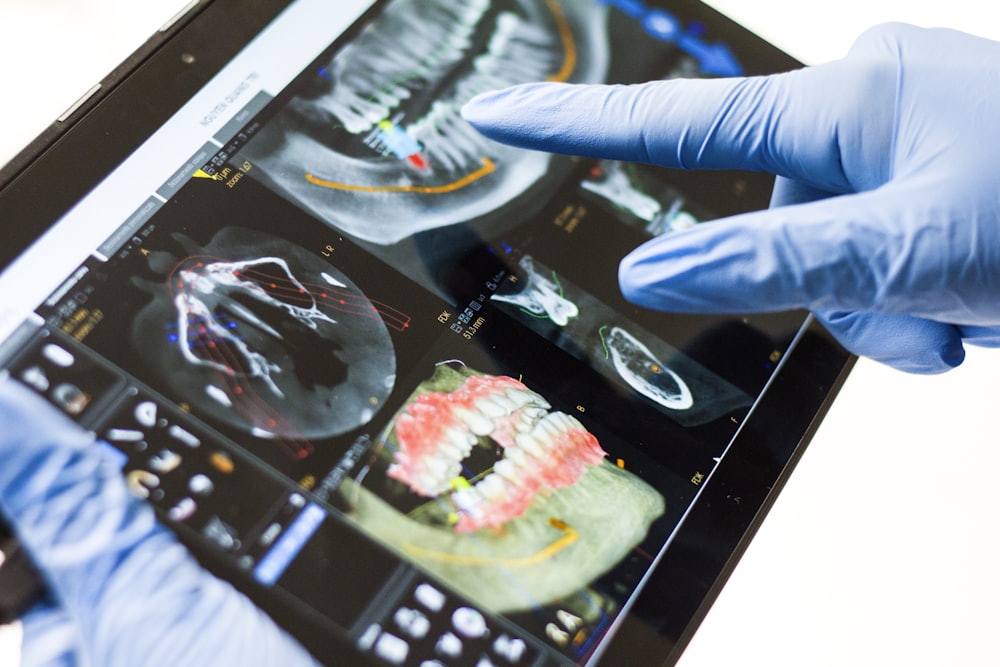
Most grafts follow a similar path. First comes planning: an exam plus a 3D cone-beam (CBCT) scan that shows exactly how much bone you have and where it is missing. On the day of surgery, the area is numbed with local anaesthetic (sedation is available for nervous patients or larger cases). The surgeon opens the gum, cleans the site, places the graft material, often covers it with a protective membrane, and stitches the gum closed.
Then comes the part that takes patience. Over the following months your own bone cells grow into and replace the graft material, turning it into living bone strong enough to hold an implant. You will usually have a follow-up visit to check healing, and in many cases a second scan before the implant is placed. Minor grafts can sometimes be combined with the implant in a single appointment, but larger grafts are staged: graft first, heal, then implant.
Healing time
Plan for roughly 3 to 6 months of healing between most grafts and the implant placement. Small socket-preservation grafts can be ready toward the shorter end, while ridge augmentation, block grafts, and sinus lifts tend to need the full window or a little longer. Soft-tissue recovery, the part with swelling and soreness, is much quicker and usually settles within a week or two. The longer wait is invisible: it is the bone quietly maturing underneath, and rushing it is the main reason grafts and implants fail, so it is worth the time.
How much bone grafting costs in Canada (2026)
Grafting is often quoted separately from the implant itself, so it pays to ask what is included. The ranges below are typical 2026 Canadian prices; the figure you are quoted depends on the size of the graft, the material chosen, your clinic, and your city.
| Type of graft | Typical cost (CAD) |
|---|---|
| Socket preservation / minor graft | $500 - $1,200 |
| Ridge augmentation | $1,500 - $3,000 |
| Sinus lift | $1,500 - $5,000 |
| Block graft / major graft | $2,000 - $4,000+ |
Prices are typical ranges. An in-person exam and 3D scan give an exact quote, and grafting may be billed on top of the implant itself.
Because grafting can add a meaningful amount to your total, it is worth seeing it in the context of the whole treatment. Our full dental implant cost breakdown shows how grafting fits alongside the implant, crown, and other fees, and if you are replacing a full arch, the All-on-4 guide explains an approach that is sometimes designed to avoid grafting altogether by anchoring into available bone.
Choosing a clinic for grafting
Grafting is a surgical procedure, and outcomes depend heavily on the surgeon's experience and planning. Ask whether the clinic uses 3D imaging, who performs the graft, what material they use and why, and how grafting is priced relative to the implant. A clear, itemized quote is a good sign. Our guide to choosing an implant provider walks through the questions worth asking before you commit, and comparing two or three clinics is the simplest way to gauge whether a quote is fair.
Common questions
Do I really need a bone graft for a dental implant?
How long does a bone graft take to heal before an implant?
Is bone grafting painful?
Where does the bone for a graft come from?
Can a bone graft and implant be done at the same time?
How much does dental bone grafting cost in Canada?
Find out if you need a graft, and what it would cost
Request free quotes from vetted Canadian clinics. Each will review your case and tell you whether grafting is needed before an implant.
Get free quotes →